| Adapted for the Internet from: Why God Doesn't Exist |
Born 63 finally synthesized waves with particles and proposed that electrons behave as particles without well-defined positions or
momenta around the atom. The mathematicians concluded that the electron was really neither a particle nor a wave, but rather a
shell-like cloud that envelopes the nucleus. But even this notion was and still is misleading. The mathematicians are really saying
that quantum equations define the region around the nucleus where we can find a little bead known as the electron:
- “ each particle has a probability amplitude describing its position. This amplitude is then called wave function. This is a
complex number-valued function of the position coordinates.” 64
And then, as always, there are conflicting versions and interpretations that come out of impeccable Math:
- “ One can either view the wavefunction as a real object that undergoes the wavefunction collapse in the second stage, or
one can imagine that the wavefunction is an auxiliary mathematical tool (not a real physical entity) whose only physical
meaning is our ability to calculate the probabilities.” 65
In other words, the electron is not really a cloud. In QM it works unscientifically. A particle (the wave function) is the ability to
calculate the location of a particle. Makes sense? (Around and around the mathematician goes and never comes up with anything
you can sink your teeth into!) The mathematicians of the Roaring 20’s gradually usurped the high ground and converted what little
was left of ‘physical’ light and electrons into functions and matrices. It didn’t matter anymore what an electron looked like; the
probability distribution of a property of the electron at the moment of measurement was now being described by something called
a wave function, a mathematical matrix. From a physical point of view, light had vanished from textbooks and discussions. The
visualization of photons and electrons was left to the idiosyncrasies of each mechanic. In the minds of the mathematicians, this
was merely a trivial philosophical issue anyways.
It was at this point that Heisenberg stepped in to put the icing on the cake for quantum theory and against rationality. In 1927, he
formally pronounced the now famous Uncertainty Principle, the notion that we cannot simultaneously know the position and
momentum of a particle. The more we know about one, the less we know about the other. In his words:
- “ At the instant of time when the position is determined, that is, at the instant when the photon is scattered by the electron,
the electron undergoes a discontinuous change in momentum. This change is the greater the smaller the wavelength of the
light employed, i.e., the more exact the determination of the position. At the instant at which the position of the electron is
known, its momentum therefore can be known only up to magnitudes which correspond to that discontinuous change; thus,
the more precisely the position is determined, the less precisely the momentum is known, and vice versa.” (Heisenberg,
1927, p. 174-5).” 66
Heisenberg concluded that:
- “ In the sharp formulation of the law of causality – ‘if we know the present exactly, we can calculate the future’ – it is not the
conclusion that is wrong but the premise.” 67
Heisenberg is saying that we cannot know the exact position a particle occupies so we cannot predict what it will do next. Theists
all over the world rejoiced. After 300 years of investigations, the scholars were finally throwing in the towel. Free will had trumped
determinism. Science had gone around 360º and was now indistinguishable from religion. Apparently, there were things that God
didn’t want Man to know. Human intelligence and knowledge apparently did have limits.
Heisenberg’s irrational pronouncements sealed the fate of what was left of Physics, and from then on Mathematical Physics
became the uncontested cult of the universities and think tanks. It eventually would provide jobs to thousands in Hollywood. His
‘discovery’ was one of those chance milestones that comes now and then at the worst possible juncture in history to veer
humanity off course on an indefinite tangent. It is hard to maintain a straight face in light of such penetrating postulate, more so in
light of the solemnity with which the establishment venerates it. Heisenberg discovered that when the ball is at rest (position), it
doesn’t move (momentum), and when the ball moves (momentum), it is not at rest (position) (Fig. 3.23). He was awarded the 1932
Nobel Prize in Quantum Magic for sharing such profound insights with humanity.
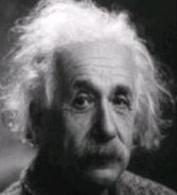
| The cloud atom! |

| The atom is like a cloud that envelopes the nucleus. If we slice an H-atom in half, it probably looks like a peach. |


- Module main page: They don't call it Quantum Magic for nothing!
This page: The Quantum electron: a bead, a ribbon, AND a cloud all in one!
Pages in this module:
1. Niels Bohr's ridiculous bead (1911)
2. De Broglie's more ridiculous ribbon (1923)
3. Max Born's even more ridiculous cloud (1926)
4. James's Bonds: A day at the York Chemistry Lab (2008)
5. Cramer believes he has seen an atom

- ________________________________________________________________________________________
- Copyright © by Nila Gaede 2008