Euclid reformulated Empedocles' earlier proposal that light consists of a shower
of particles that travel from the observer to the object.
of particles that travel from the observer to the object.
aAAA

al Hazen proposes that light travels from an object to the eyes.
Hooke suggests in Micrographia that light consists of
pulses or vibrations that propagate as water waves.
pulses or vibrations that propagate as water waves.

Our modest beginnings
The Revolutionary 17th Century
Ibn Sahl discovers the equation of the refraction of light.

Da Vinci discoveres that light arrives at the eye radially.
aAAA
Bartholin discovers polarization.

Investigating Cassini's hunch about the eclipses of Jupiter's moons, Rømer
establishes that light travels at a fixed velocity.
establishes that light travels at a fixed velocity.
Newton discovers that white light is comprised of different colors.


| Galileo proves with an experiment Descartes' suspicion that light travels instantaneously. |


Using Rømer's method, Huygens calculates the velocity of light in 16 2/3 Earth
diameters per second. He proposes that light consists of longitudinal waves.
diameters per second. He proposes that light consists of longitudinal waves.

Bradley calculates the velocity of light more accurately using the method of aberration.

984
1000
1500
The Age of Waves
The New Wave... packet


Young performs the slit experiment and concludes that light does not consist
of particles as Newton had suggested, but of waves.
of particles as Newton had suggested, but of waves.
1642
1665
1669
1676
1680
1703
1727
1802
1819
1821
1823
1833
1848
1849
1850
1862
1881
1887
1895
1819
1821
1823
1833
1848
1849
1850
1862
1881
1887
1895
Fresnel proposes that light consists of transverse rather than longitudinal waves.
He uses this model to explain Young's slit experiment in terms of constructive
and destructive interference.
He uses this model to explain Young's slit experiment in terms of constructive
and destructive interference.
Oersted discovers by accident that an electric current generates a magnetic field.
Faraday discovers that a magnetic field generates an electric current.
Fizeau discovers the Doppler Effect in electromagnetism.
Foucault demonstrates that light travels slower through water than through air.
Hertz experimentally confirms the electromagnetic waves proposed by
Maxwell and discovers the Photoelectric Effect where light pressure causes
a polished metal surface to conduct electricity.
Maxwell and discovers the Photoelectric Effect where light pressure causes
a polished metal surface to conduct electricity.
Roentgen discovers that X-rays are electromagnetic waves of higher frequency.
Michelson determines that there is no aether, an alleged medium of which light is
made and which pervades all of space.
made and which pervades all of space.
1900
1905
1919
1927
Planck theorizes that light comes in the form of discrete packets of energy.
Einstein explains Hertz's Photoelectric Effect by making the assumption that
light consists of a stream of particles.
light consists of a stream of particles.
Assuming that light consists of particles, Eddington proves with an observation
that light travels in curves around the Sun.
that light travels in curves around the Sun.
Bohr enunciates his Complementarity Principle where the mathematicians
finally decree that light consists of wave-packets: simultaneously a particle
and a wave.
finally decree that light consists of wave-packets: simultaneously a particle
and a wave.
Since the Roaring 20s we have made no progress in our understanding of the structure of light. We
went from particles to waves to wave-packets and there we stayed until today.
Today we propose an alternate model of light that explains electromagnetic phenomena as well as
gravity.
went from particles to waves to wave-packets and there we stayed until today.
Today we propose an alternate model of light that explains electromagnetic phenomena as well as
gravity.
Maxwell synthesizes Oersted and Faraday observations and concludes that light is
transverse wave comprised of an electric and a magnetic 'field'. He theorizes that light
can exert pressure on a surface.
transverse wave comprised of an electric and a magnetic 'field'. He theorizes that light
can exert pressure on a surface.
Fresnel explains polarization with transverse waves.
He measures the velocity of light to almost its present value and determines that it
travels at a constant speed independently of the movement of the source.
travels at a constant speed independently of the movement of the source.

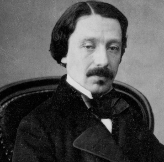


Kepler describes the inverse square law of the intensity of light.


| A brief history of light |


.
| To comment on any of the pages in this website go to: Rational Science |

